Pool contractor lead intake
Pool Estimate Request Form: What to Ask Before the Site Visit
A short form that gives your team enough context to respond well—without asking the homeowner to design the whole pool on a phone.
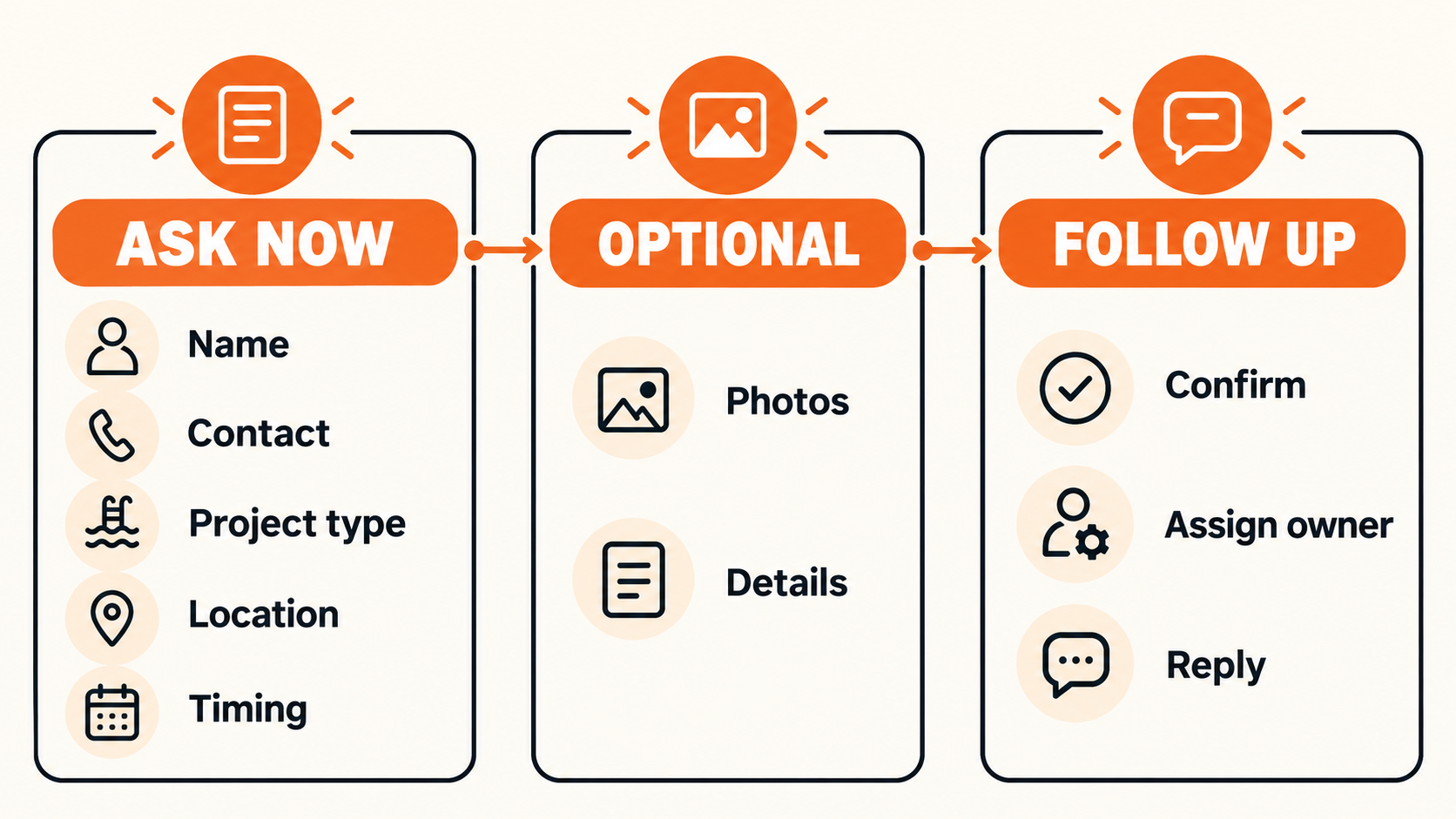
Short answer: start with name, a reliable contact method, project type, project location, and rough timing. Make photos and a brief project description optional. After submission, confirm receipt, assign an owner, and explain the next step. An inquiry form should open a useful conversation; it should not pretend to produce a final pool quote without a site visit.
For pool builders and remodelers, a good estimate form bridges the gap between a mobile visitor and a real consultation. It is one part of the broader pool contractor marketing path: project proof earns interest, a clear request form captures it, and your response earns the conversation. This guide covers the intake step before the site visit. If you have already sent a proposal, use our separate pool estimate follow-up guide.
Ask for the five things your team needs to take the next step
1. Name
Ask who your team should address. Keep this simple; a first name and last name are enough for the first conversation.
2. Contact
Ask for at least one reliable way to reply. If you offer phone and email, let the homeowner tell you which is best. Do not make both mandatory unless your workflow truly needs both.
3. Project type
Use a short list that matches the work you sell: new pool, remodel or resurfacing, repair, or not sure. Route each type to the right person rather than making every inquiry take the same path.
4. Location
Ask for city or ZIP code first so you can confirm the service area. Request the exact property address later, when a visit is being scheduled or site-specific advice is needed.
5. Rough timing
Give broad choices such as “as soon as practical,” “within a few months,” and “still planning.” Timing helps the reply; it is not a promise of construction availability.
If the form collects both phone and email, add a preferred-contact choice. Keep the first screen short enough that a homeowner can complete it on a phone.
Make project details and photos helpful, not a barrier
A free-text box can reveal whether the homeowner wants a new pool, a remodel, a repair, or simply wants to explore options. Label it “Tell us a little about your project (optional).” Photos can help with an existing pool or access concern, but do not require them to submit. On mobile, file upload may be inconvenient, and photos alone cannot establish scope, site conditions, or price.
For a new build, useful follow-up questions may include intended use, preferred features, yard access, and whether the owner has a survey or design. For a remodel, you may ask about the existing pool, finish, equipment, and what is changing. Those are good consultation questions; most do not belong as required fields on the first form.
A mobile-first form you can adapt
Button: “Request a pool consultation.” Near the button, say what happens next and link to your privacy policy. Do not label the button “Get an instant quote” unless you really provide one.
What to leave off the first form
- Exact budget as a required field. A range may be useful later, but an uninformed homeowner may guess or abandon the form. If you ask, make it optional and explain why.
- Detailed dimensions and equipment choices. They can be inaccurate before a site conversation and may create a false impression that the project can be quoted remotely.
- Full street address too early. City or ZIP code is usually enough for the first service-area check.
- Long multi-page questionnaires. Save deeper qualification for a conversation, particularly when project type changes what matters.
This is not an argument against qualification. It is a sequencing decision: collect the minimum needed to respond, then ask project-specific questions when a person can explain why they matter. A clear service page and genuine project examples can also prequalify visitors before they reach the form. See our contractor website design service for how those pieces fit together.
Quick form-readiness check
Check what your current pool estimate form already does. This is a planning aid, not a live form or lead submission.
0 of 5 checked.
Your checks stay in this browser only; nothing is sent to MME.
The confirmation and response are part of the form
Test the complete path, not just the button. After submission, show a plain confirmation with the next step and a realistic response expectation that your team can actually meet. Send the inquiry to a specific owner, include the project type and location in the notification, and check what happens when that person is unavailable. Use a real test submission on desktop and mobile.
If a lead sits unclaimed, a shorter form will not fix the problem. Our guide to responding to new contractor leads covers the first-contact workflow. The $297/month Contractor Growth System described on the pool marketing page connects the website, CRM, and follow-up foundation; the form still needs your team’s own response process.
Do not turn the inquiry into a price promise
Site access, design, permitting, existing conditions, and selections can change the scope. If you offer a contractor estimate and profit calculator, use it for your internal pricing discipline after you understand the project—not as an automatic homeowner quote from a short form.
Frequently asked questions
Should a pool estimate form ask for a budget?
It can be an optional range if your team uses it to guide an honest conversation. Do not require an exact number before the homeowner understands scope, and do not imply the number is a final quote.
Should photos be required for a pool remodel request?
No. Photos can be helpful, especially for existing finishes or equipment, but a homeowner should still be able to ask for a consultation without uploading files from a phone.
Should the form be different for new pools and repairs?
The first form can share core contact, location, and timing fields, but the project-type choice should route the lead correctly. Follow-up questions for a new build are different from those for equipment repair.
Can a form give an accurate pool price instantly?
A short form may support a broad preliminary conversation, but it cannot verify access, site conditions, design, approvals, or exact scope. State clearly when a number is only an estimate and what must be checked before a proposal.
What should the thank-you message say?
Confirm that the request arrived, explain who will respond and by what channel, and give a truthful response window. If there is an urgent repair path, make that clear without promising emergency availability you do not offer.
Find the friction between pool search and booked consultation
Matt’s Marketing Express can review your pool service pages, estimate request form, confirmation, and lead follow-up as one path. We’ll identify the clearest practical fix, not hand you a generic list of marketing tasks.
Get a free contractor marketing review