Pool builder estimate follow-up
How to Follow Up After a Pool Estimate
A practical, low-pressure process for pool builders and remodelers after the proposal is in a homeowner’s hands.
Short answer: confirm the homeowner received the correct proposal, ask what part of the scope needs clarification, agree on a realistic decision step, and record the next action. Follow up on the decision, not just the silence. A pool build may involve design choices, permits, site conditions and family timing; another “just checking in” message rarely resolves those questions.
This guide starts after you have met the homeowner and sent an estimate or proposal. If inquiries are going cold before that meeting, see our guide to responding to new contractor leads. For a broader view of getting pool estimate opportunities, see MME’s pool contractor marketing page. Here, the job is narrower: help a real buyer make an informed decision about a specific pool project.
Before you follow up, check what the proposal actually says
A follow-up cannot repair a proposal that leaves the homeowner guessing. Make sure the version you sent identifies the project and plainly separates included work from options and assumptions. A new pool and a resurfacing project need different detail, but the homeowner should be able to tell what they are comparing.
Scope and selections
State the planned pool type and dimensions, finish, equipment, decking or hardscape boundaries, and which choices are still allowances or options.
Site and approval assumptions
Flag access, utility, soil or existing-condition assumptions. Explain who handles required approvals, while avoiding a permit or start-date promise you have not verified.
Price and change process
Show the price basis, payment milestones and how a scope change will be priced and approved. Do not hide a major exclusion in a footnote.
Decision and contact path
Give the homeowner one clear way to ask a question, request a revision or schedule a call. Record who on your team owns the reply.
If the proposed price itself is uncertain, revisit your job economics before negotiating by reflex. MME’s free contractor estimate and profit calculator can help you pressure-test cost, margin and target price; it does not replace a project-specific estimate.
Quick proposal-readiness check
Check the facts you can already point to in the version you sent. This is a private on-page checklist; nothing is submitted or stored.
0 of 5 checked. Fix the proposal before sending another reminder.
A checked box is a prompt for your team, not a certification of the estimate, contract or permit status.
Use a four-step decision path after every pool proposal
Confirm: check that the correct version reached the homeowner. Clarify: ask for the one detail making a decision difficult. Decide: agree on a call, revision, site visit or decision date when appropriate. Record: put that action and owner in your pipeline. The sequence keeps communication useful without manufacturing urgency.
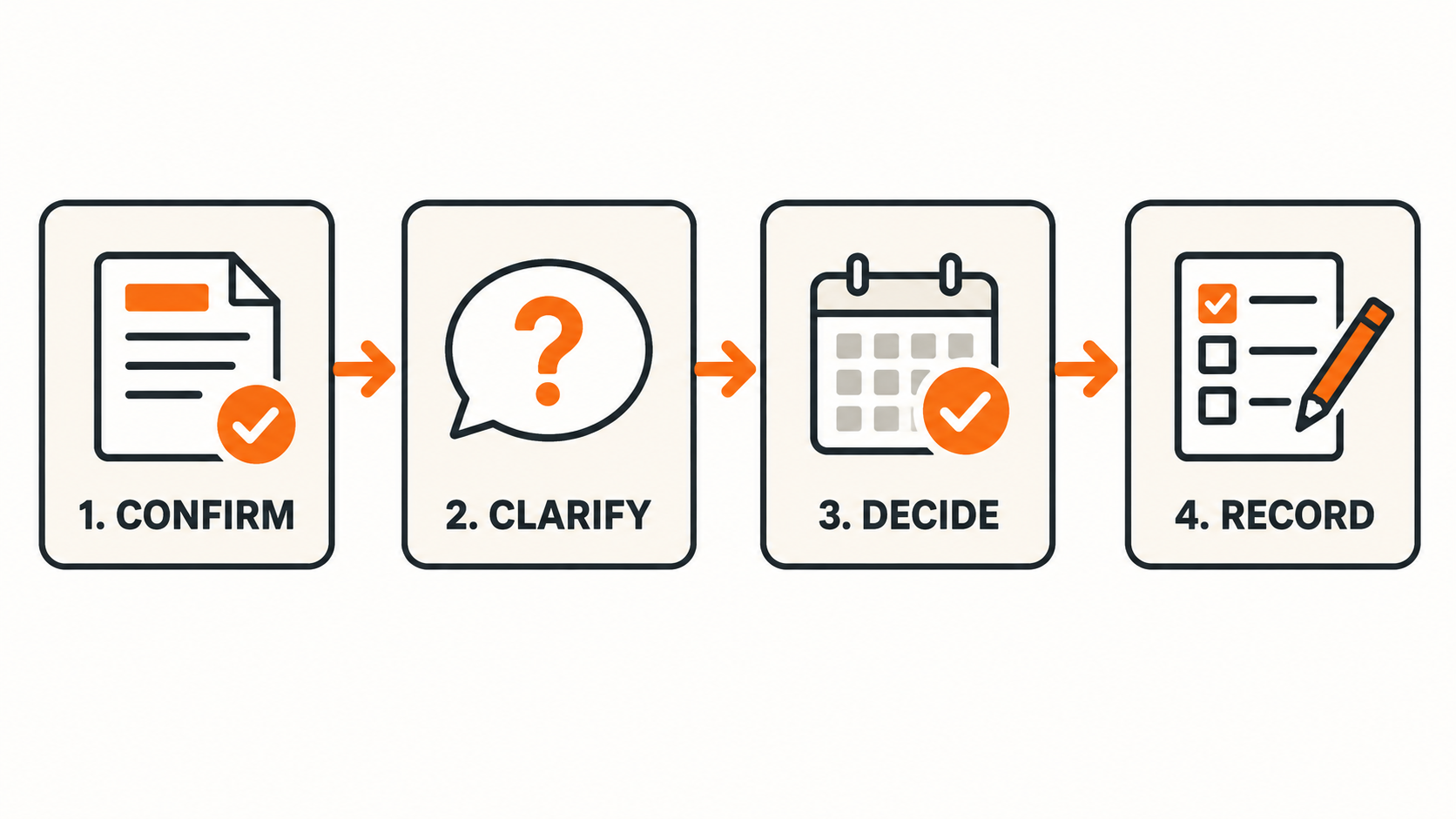
A follow-up rhythm that respects the homeowner’s timeline
Use the decision date the homeowner gave you before using any generic cadence. If none was agreed, this sample rhythm is a starting workflow, not a universal rule: confirm delivery at send, offer help after roughly two business days, follow up near their stated decision point, and close the loop once if the conversation remains quiet. Choose the channel they have used with your company and honor requests to stop messages.
| Stage | Useful purpose | What to record |
|---|---|---|
| When sent | Confirm the proposal version, scope and best contact for questions. | Version, send date, delivery channel, owner |
| After the homeowner has had time to read | Ask whether one selection, allowance, schedule assumption or comparison needs clarification. | Question, responsible person, promised reply |
| At the agreed decision point | Offer a specific next step: a revision, call or site check—not a vague push to sign. | Next action and date |
| If still quiet | Send one respectful close-the-loop note and stop chasing. | Status: active, deferred, lost or no response |
What to say in common pool-estimate situations
These examples are drafts to personalize, not an automated sequence. Replace bracketed fields and confirm the statement is true for that project before sending it. Never imply that a permit, price, financing option or build slot is guaranteed if it is not.
1. Confirm the proposal landed
“Hi [Name], I sent the [pool build/remodel] proposal for [project or address] today. It covers [specific included scope] and lists [choice still open] as an option. Did the file come through clearly? I’m happy to walk through any part that needs more detail. — [Your name]”
2. Clarify a design or scope question
“Hi [Name], after our visit I wanted to make sure the proposal makes the [decking/equipment/finish] choice easy to compare. Is that the part you would like us to review together, or is another detail more important to your decision?”
3. When the homeowner is comparing bids
“That makes sense. Pool proposals can differ in what they include. If it helps, I can point out exactly where ours covers [specific scope item] and which items are optional, so you can compare the same work. No pressure—send over any question you want clarified.”
4. Close the loop without a false deadline
“Hi [Name], I haven’t heard back about the [project] proposal, so I’ll pause my follow-ups for now. If your plans change or you want to revisit [specific open choice], reply here and I’ll help with the next step. Thanks for considering us. — [Your name]”
Do not confuse a revision with a reminder
If the homeowner asks to change size, equipment, decking or scope, send a clearly labeled revised proposal. Identify what changed, update the pricing and assumptions, and confirm which version is current. A quick text saying “we can do that” is not a substitute for a documented scope change.
Record the reason a proposal is waiting
A pool estimate can be quiet because the family is comparing scope, waiting on a design choice, reviewing cost, checking timing or simply not ready. Those situations deserve different next actions. In a simple pipeline, record the proposal version, last real conversation, open question, next action, owner and decision date. Mark “deferred” or “lost” when that is the truth; do not keep every silent proposal in an “active” bucket forever.
That is where MME’s contractor follow-up and CRM service fits: reminders keep an owner from forgetting a promised action, while a real person handles scope and objections. The pool contractor page also explains the $297/month Contractor Growth System for a connected website, CRM and follow-up foundation. You do not need a complex sequence to start—just a reliable record of the next decision.
Frequently asked questions
How soon should a pool builder follow up after an estimate?
Use the date you agreed with the homeowner. If there was no agreed date, confirm delivery when you send the proposal, then give them time to read before asking a specific question. A couple of business days may be reasonable for an initial clarification, but project complexity and the customer’s preference matter more than a fixed rule.
Should I call, text or email after a pool proposal?
Start with the channel the homeowner has used or requested. Email works well for documents and revisions; a brief call can resolve complicated scope questions. Keep texts concise, avoid repeated unsolicited reminders, and honor any request to stop.
What if another pool builder quoted less?
Help the homeowner compare included scope, equipment, finish, access, allowances and assumptions before reacting to a price difference. If your scope genuinely needs to change, issue a revised proposal. Do not promise that a lower bid is wrong or cut your price without understanding your costs.
What if the homeowner is not ready this season?
Record the real timing and ask whether they want you to check back at a specific point. Explain that pricing and availability may need to be reconfirmed later. Do not invent a deadline to force a decision.
Can follow-up be automated?
Automate the reminder to your own team and the pipeline status. The message to the homeowner should still reflect their project and latest conversation. Scope changes, approval assumptions and objections need human review.
Find the leak between pool inquiry and booked project
If proposals are going quiet, Matt’s Marketing Express can review the whole path—from local visibility and estimate requests to proposal handoff and follow-up—and identify the first practical fix. Start with a free contractor marketing review.
Get a free contractor marketing review