
Painting Estimate Scope Checklist for Contractors
A practical walkthrough for capturing the work, the exceptions, and the homeowner’s next decision before you send a painting proposal.
By Matthew Lanzarotto · Matt’s Marketing Express

Illustrative image: record visible surface conditions while the homeowner can clarify the scope.
Short answer: a useful painting estimate starts with a written scope, not a number. Record exactly which surfaces are included, what preparation you observed, what finish assumptions you are making, and what could change after work begins. Then tell the homeowner when and how the proposal will arrive.
This guide is for the owner or estimator who has already earned a walkthrough. The painting contractor marketing page covers how to create more of those opportunities; this checklist focuses on turning one visit into a clear proposal the homeowner can compare and approve. It is an internal planning aid, not a substitute for your company's contract terms or local requirements.
Begin with the job the homeowner thinks you are pricing
Before measuring or pricing, ask the homeowner to walk you through the result they expect. “Paint the living room” can mean walls only, or walls plus ceiling, baseboards, doors, repairs, and furniture movement. Repeat the scope back in plain language and note each included surface by room or elevation.
Capture the decision details while you are together: who chooses colors, whether paint is supplied by your company or the homeowner, whether the home will be occupied, and whether access is limited to certain days or areas. If an item is undecided, record it as an assumption to confirm in writing instead of silently pricing one version.
Use this walkthrough checklist
Open the list that matches the job. Add your own trade-specific notes, but keep the final proposal readable to a homeowner who was not standing beside you during the visit.
Interior painting walkthrough
Surfaces: list walls, ceilings, trim, doors, cabinets, and rooms separately. Note surfaces the homeowner assumes are included but you will exclude.
Preparation: record visible holes, cracks, stains, peeling, caulk gaps, and protection needed for floors, furniture, fixtures, and occupied rooms.
Finish and access: confirm product and coat assumptions, sheen/color decision, furniture movement, pets, parking, work hours, and which areas can be available together.
Exterior painting walkthrough
Surfaces: walk each elevation and identify siding, stucco, trim, doors, railings, fences, and other areas individually.
Preparation: note visible peeling, failed caulk, wood damage, washing or masking needs, landscaping protection, and surfaces needing a closer inspection.
Access and timing: note height, ladders or lift access, gates, vehicles, plants, weather-sensitive scheduling, and who will approve any additional repair.
Four notes that make the proposal easier to approve
The field map below is a quick handoff from the walkthrough to the written estimate. Share it with an estimator or office teammate so the proposal does not depend on one person's memory.
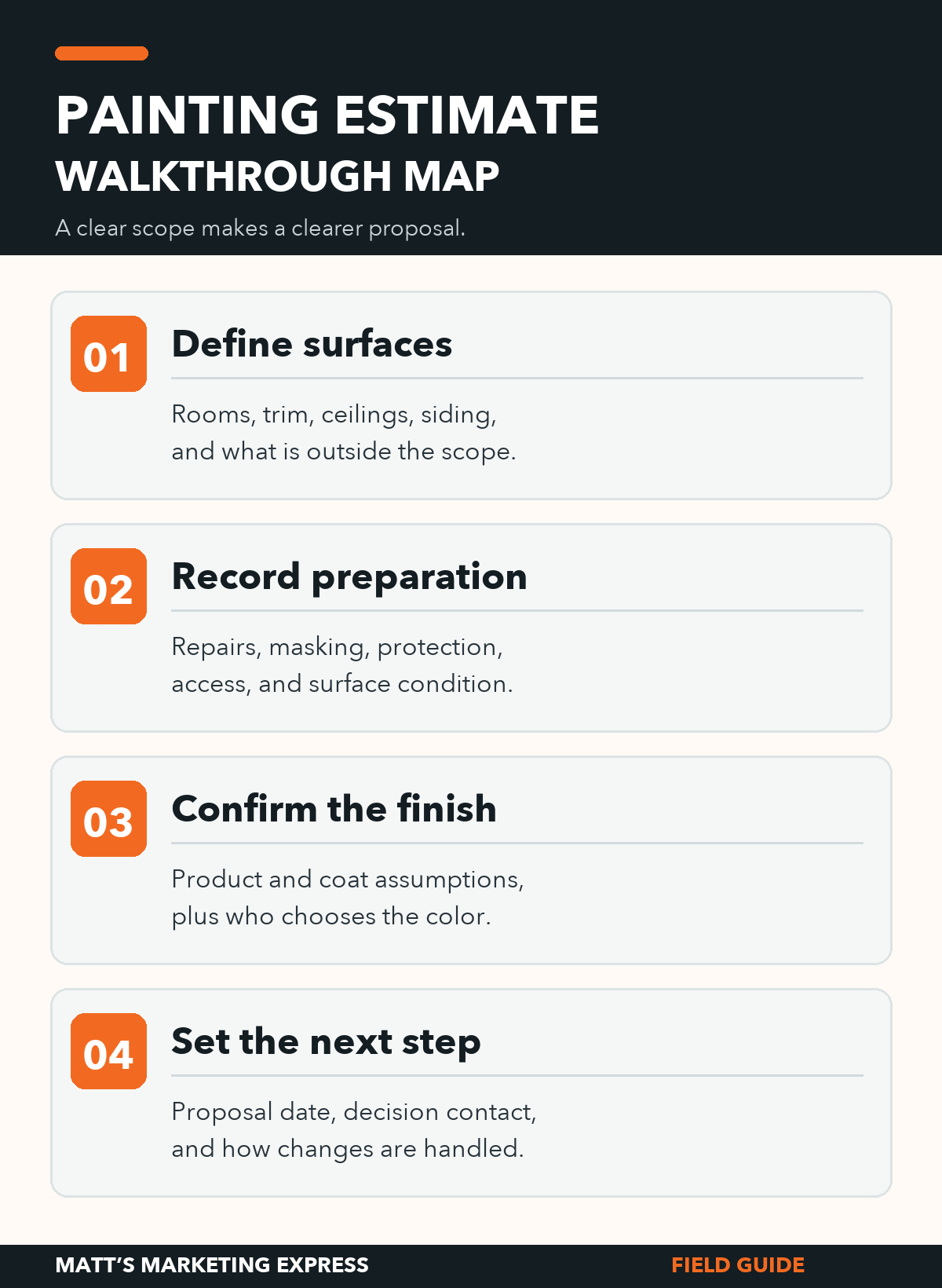
Walkthrough map: define surfaces, record preparation, confirm the finish, then set the next step.
Turn field notes into a scope paragraph
Field note: “Living room walls, patch a few spots, two coats.” That may be enough for your crew to remember the visit, but it leaves the homeowner guessing which repairs, materials, and adjacent surfaces are included.
This is an example of scope clarity, not a promised method or a contract template. Adapt the preparation and product details to the surfaces you actually inspected and the work your team will perform.
Write assumptions and exclusions where the customer can see them
A clean estimate identifies what is included, what is excluded, and what requires a decision. Common painting examples are color changes after materials are ordered, unexpected substrate damage, moving heavy furniture, replacing rotten wood, or painting a surface that was not part of the walkthrough. Use the specific items that matter for this job; a generic wall of disclaimers is easy to miss.
If you cannot verify a condition until work starts, say what you observed and describe the approval process for a change. That protects both sides from treating a new repair as an informal verbal add-on. Confirm the person authorized to approve changes before the crew arrives.
Price the documented work, then check the margin
Once the scope is settled, estimate labor, materials, equipment, subcontractors, contingency, and a realistic share of overhead. The free contractor estimate and profit calculator is a useful internal check on the price and target margin. It does not turn a short homeowner inquiry into a firm quote; the walkthrough still determines what the price covers.
End the visit with a clear decision path
Tell the homeowner when to expect the written proposal, who will send it, how to ask a scope question, and what happens after approval. Put that date and owner in your team record. If the proposal needs a selection or another site detail before it can be final, list the open item and who is responsible for it.
A proposal that arrives on time but then sits unanswered still needs a respectful process. The lead follow-up service page explains the wider handoff system; this article's job is to make the estimate itself clear enough that follow-up can answer a real question instead of merely asking, “Did you see it?”
Five-point check before you send
1. Every room or elevation is named, and included surfaces are explicit.
2. Preparation and protection match what you actually observed.
3. Product, coat, color, and access assumptions are visible.
4. Exclusions and change approval are easy to find.
5. The homeowner knows when the proposal arrives and how to decide.
Frequently asked questions
Should a painting estimate specify the number of coats?
State the product and coat assumptions you are pricing. If the needed coverage could change because of the existing color or surface condition, explain how that would be reviewed and approved.
What if I cannot see all the preparation work during the visit?
Describe the visible condition and the preparation included in the price. Identify any condition that requires closer inspection, and explain how additional work will be proposed before it is performed.
Should I give a price during the walkthrough?
Only give a number you can stand behind for a defined scope. If materials, repairs, access, or selections are still uncertain, a written proposal after the visit is clearer than a rushed verbal figure.
What if the homeowner adds rooms after receiving the proposal?
Revise the scope and price in writing, then get approval for the new version. Keep the original and revised scope distinguishable so your team and the homeowner know which work was authorized.
Find the gap between estimate requests and booked work
Matt’s Marketing Express can review the path from first inquiry to walkthrough, proposal, and follow-up. Bring one recent estimate process and we will help identify where the handoff is unclear. Start with a free contractor marketing review.
Get a free contractor marketing review