
Hardscape Estimate Request Form: What to Ask Before a Site Visit
Collect the few details that make a hardscape inquiry useful, then let your team choose the right next conversation.
By Matthew Lanzarotto · Matt’s Marketing Express
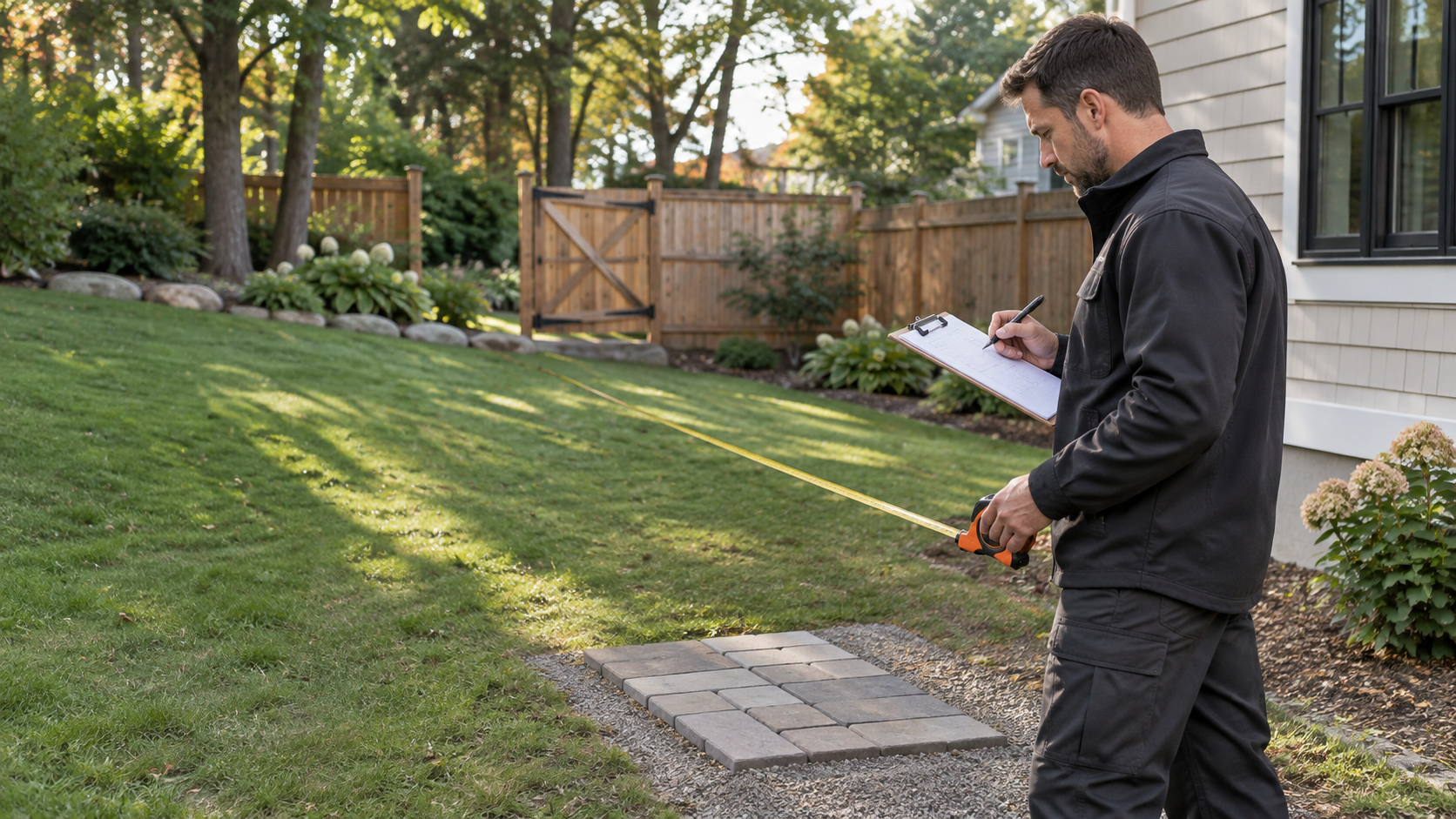
Illustrative image: an estimator checks the yard and access before deciding what the project needs.
Short answer: a hardscape estimate request form should capture the project type, property location, a short description, and one reliable way to reply. Let homeowners add photos, access notes, timing, and budget context if they have them. Then have a person decide whether the next step is a quick call, a site visit, or a polite referral.
This guide is for hardscaping and landscape construction owners who want better estimate conversations from their website. It covers the intake before an estimator has measured, designed, or priced the job. For the broader path from inquiry to booked conversation, see MME’s contractor lead generation service.
Give the form one useful job
A homeowner may know they want a patio but have no idea whether the area is 300 or 500 square feet, what base preparation is needed, or how drainage will be handled. A form that demands technical answers guesses at the scope before your team has seen the property. A form with only “Name” and “Message,” however, can leave your estimator with no idea whether the work is even in your service area.
Ask only enough to route the request. Your team can gather dimensions, material selections, grade conditions, and approval details in a conversation or site visit. This is the same principle behind the site’s pool estimate request form guide, but the hardscape version needs its own project and property questions.
Four things worth requiring
1. Name and one reply method. Let the homeowner choose phone or email and require the matching field; do not make both mandatory.
2. Property city or ZIP code. Use it to confirm you serve the job location before anyone schedules a drive.
3. Project type. Offer only work your company actually sells, such as patio, walkway, outdoor living area, or wall; include “not sure” for early-stage buyers.
4. A short description. Ask what they want to change and where, in their own words. A brief answer is enough to start a useful call.
Label the button Request a project conversation or Request an estimate, then explain what submission actually does. Do not imply the form instantly prices the project or reserves an appointment unless it truly does.
Put project detail behind optional questions
Optional details can help an estimator prepare without making the form feel like homework. Ask for wide photos of the area and access route, a preferred time frame, any existing plan or inspiration image, and a budget range only if it changes how you discuss options. Let people say they are unsure. Never turn an unknown answer into an automatic disqualification.
Patio or walkway request
Ask which area of the property is involved, how the space will be used, and whether there are existing surfaces to remove. Offer optional photos of the work area and the path from street to yard. These answers help plan the first conversation; your team still needs to verify conditions before quoting.
Wall or grade-change request
Ask what the homeowner is trying to solve and whether they can share photos showing the wider area, not just a close-up. Do not ask them to diagnose drainage, structural needs, or permits. Route these requests to someone qualified to assess the site and explain what information is needed next.
Tell the homeowner what happens after submit
A useful confirmation message should say the request was received, who will review it, and when the homeowner can expect a response. If your team cannot promise a same-day reply, give a realistic window. The confirmation should also say that a site visit is arranged after review, rather than implying one is already booked.
Assign every new request to an owner in your inbox or CRM. Record the lead source, the missing fact, the next action, and the date you promised. A form cannot help if the notification goes to an unchecked mailbox. MME’s lead follow-up service covers the wider response system after submission.
Keep intake separate from the estimate
A homeowner’s requested size, budget, or photo is context, not verified scope. During the call or visit, confirm access, existing surfaces, grade, intended use, material choice, and any other conditions your team needs to price responsibly. If the request is out of area or outside your services, reply clearly instead of letting it sit unanswered.
Once scope and quantities are verified, use the free contractor estimate and profit calculator to check job costs, overhead, and target margin. It is an internal pricing aid, not an instant quote generated from the intake form.
The request-to-visit handoff
The field map below shows what to collect now and what a person should decide afterward. It is meant for the office and estimator to use together.
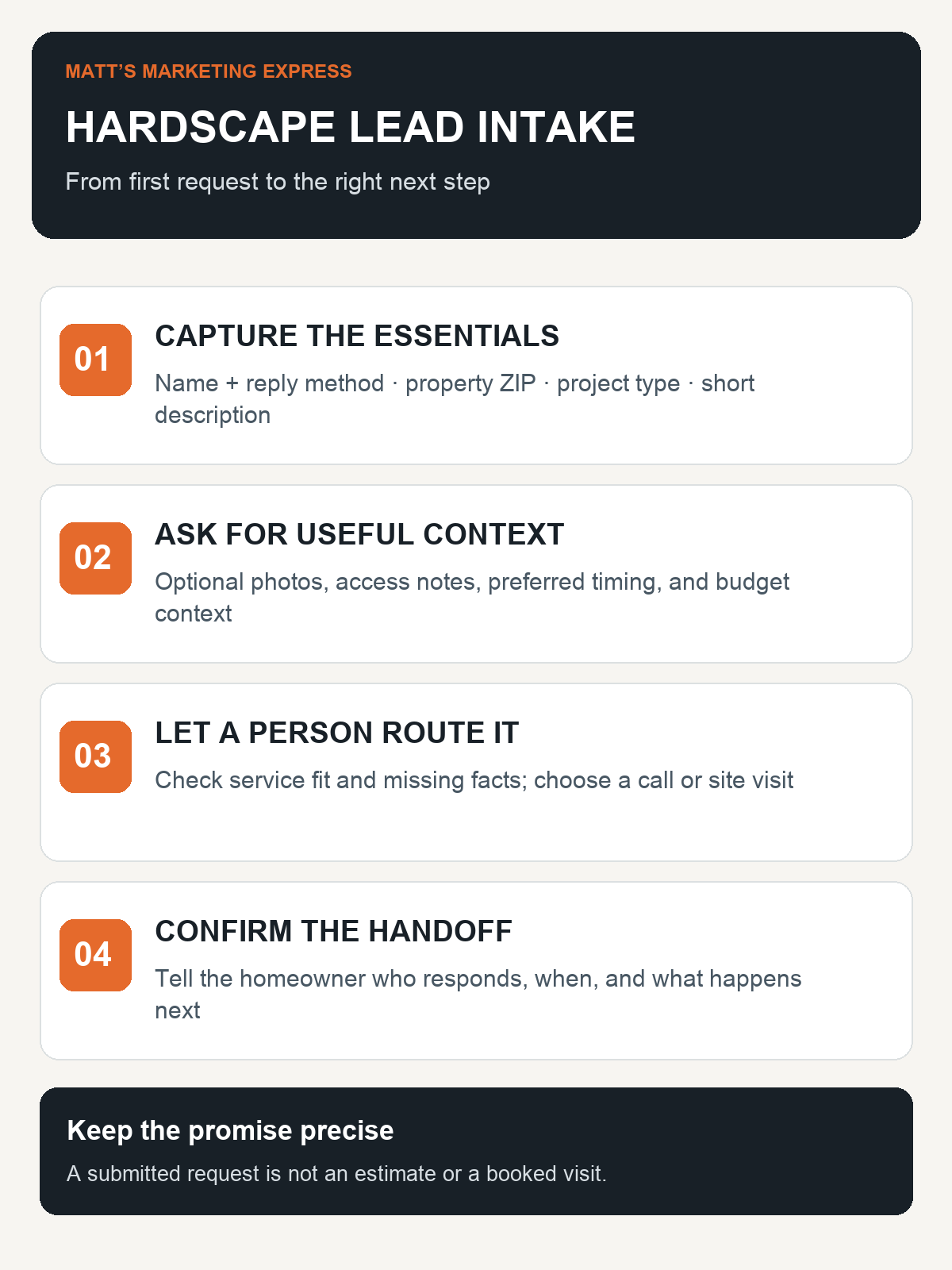
Hardscape lead intake: capture essentials, ask for context, route the request, then confirm the handoff.
A five-minute audit of your current form
1. Open the form on your phone. Can you finish it without knowing the exact dimensions or budget?
2. Submit a test inquiry. Does the right person receive it with the project type and property location?
3. Read the confirmation as a homeowner. Does it promise only what your team can deliver?
4. Check your CRM or inbox. Is there a named owner and a follow-up date?
5. Remove any field your team does not use to decide the next step.
Frequently asked questions
Should a hardscape estimate form require a budget?
Usually no. If budget shapes your project fit or design conversation, ask for an optional range and let the homeowner choose “not sure.” Explain how you will use the answer; do not treat it as the price you will charge.
Can photos replace a hardscape site visit?
Photos help you triage and prepare, but they rarely show every access, grade, or existing-condition detail needed for a firm scope. Let your estimator decide whether a visit is needed.
How many questions should be required?
Keep only the fields that let you reply and route the request: contact, location, project type, and a short description. Add a required field only when the answer consistently changes the next step.
Should the form book a visit automatically?
Only if your team can honor that booking without reviewing project fit first. Otherwise, make the form a request and have a person confirm the appointment after a short qualification call.
Find the gap between hardscape inquiries and booked visits
Matt’s Marketing Express can review your hardscape inquiry path, form, notifications, and follow-up. Bring one recent request and we will identify the first handoff worth improving.
Get a free contractor marketing review